
Fall Bedroom Decor: Warm Layers You Can Use All Winter

Fall bedroom decor can start with one fabric you look forward to using on a cool evening. A rust-colored throw, an olive quilt, or a warmer patterned cover changes a large part of the view without requiring a new bed, a new rug, and a box of decorations.
Build around the bedding and furniture you already like. The rooms below show different color and texture choices, so choose the route that suits your bedroom instead of trying to combine every example. The useful seasonal update is the one you can live with after the pumpkins disappear from the stores.
Jump to a section
- Start your fall bedroom decor with what stays
- Choose one fabric to carry the seasonal color
- Add a layer you will actually sleep under
- Keep blue if blue is already your bedroom color
- Use texture when you want a quieter palette
- Borrow the small finishing pieces from another room
- Keep a small bedroom clear around the bed
- If you rent, keep the seasonal changes in the textiles
- FAQ
Start your fall bedroom decor with what stays

Keep the main bedroom pieces and identify the layer that feels least suited to the season. That might be a lightweight throw, a bright accent cover, or a bedside surface crowded with summer objects. It does not have to be the walls.
The plain room here is a useful starting point: simple bedding, warm wood, and open floor. A seasonal textile would be visible immediately because there is little competing with it.
Before shopping, look at the room from the doorway. Write down the colors that already occupy the most space. Pick an addition that works with those colors rather than a fall palette that would require replacing everything around it.
Choose one fabric to carry the seasonal color
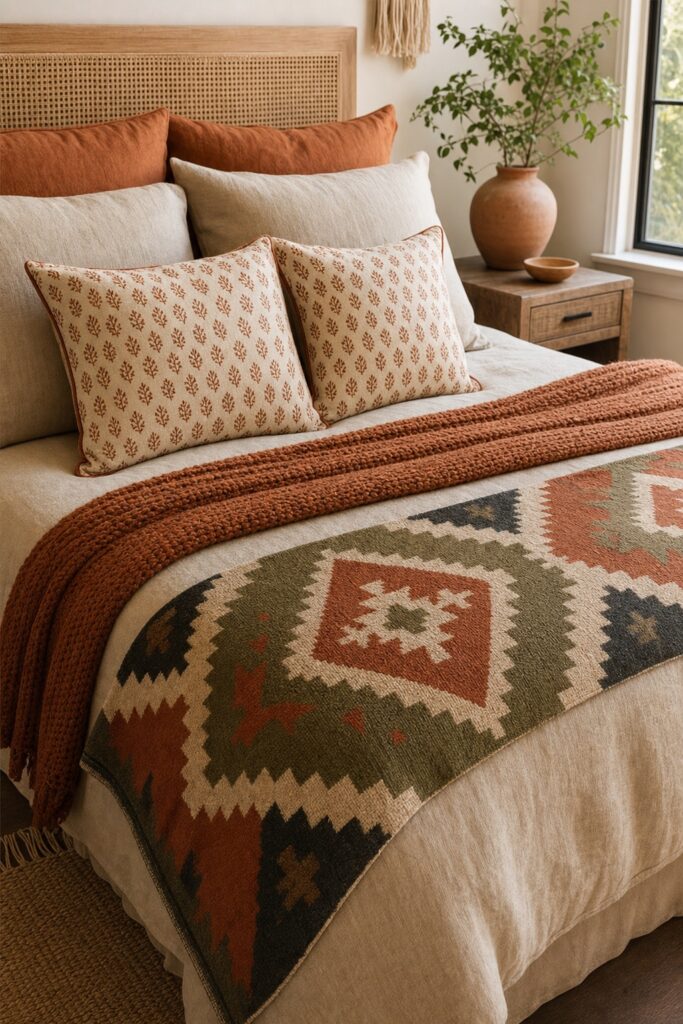
Let one patterned or strongly colored textile lead, then repeat a color from it in a smaller detail. In this example, rust and muted green in the bed covering connect the pillows and other layers. The pattern gives the choices a clear starting point.
You do not need this many pillows to use the idea. A patterned throw over plain bedding may be enough. If you want to try the palette cheaply, move a throw from the living room onto the bed for a few evenings before buying a replacement.
Choose a fabric that you like close up as well as across the room. A cover that looks right but feels scratchy where you touch it will become something you remove every night.
Add a layer you will actually sleep under

Choose bedding for your room temperature and preferences, then use its texture as the decoration. A quilt folded across the foot of the bed can stay within reach without covering the whole bed on a warm night.
The olive layer shown here adds color through a useful object. Fold a similar layer at the foot while the room is warm, then pull it up when you want it. Choose its fiber content and weight for the way you sleep.
Read care instructions before adding a bulky blanket. Make sure you can wash and dry it as directed with the facilities you use. For example, IKEA's HORNMAL throw is not suitable for tumble drying, according to its listing checked September 6, 2026. That is a care example, not the product pictured here; check the actual piece you are considering.
Keep blue if blue is already your bedroom color

Fall does not require orange. Navy bedding can feel seasonal alongside warm wood, cream, and a softer neutral layer. You can keep the room's existing identity and adjust the supporting details.
In this navy bedroom, the lighter bedding layers stop the bed from becoming one dark block, while the wood adds warmth. That is the part worth borrowing. Repainting a wall is not necessary to use navy and cream together.
If your room already contains cool gray or blue, bring a warm neutral sample home and see it beside those finishes. A beige that looks gentle in the store may read yellow beside your existing fabrics. Your room's light gets the final vote.
Use texture when you want a quieter palette
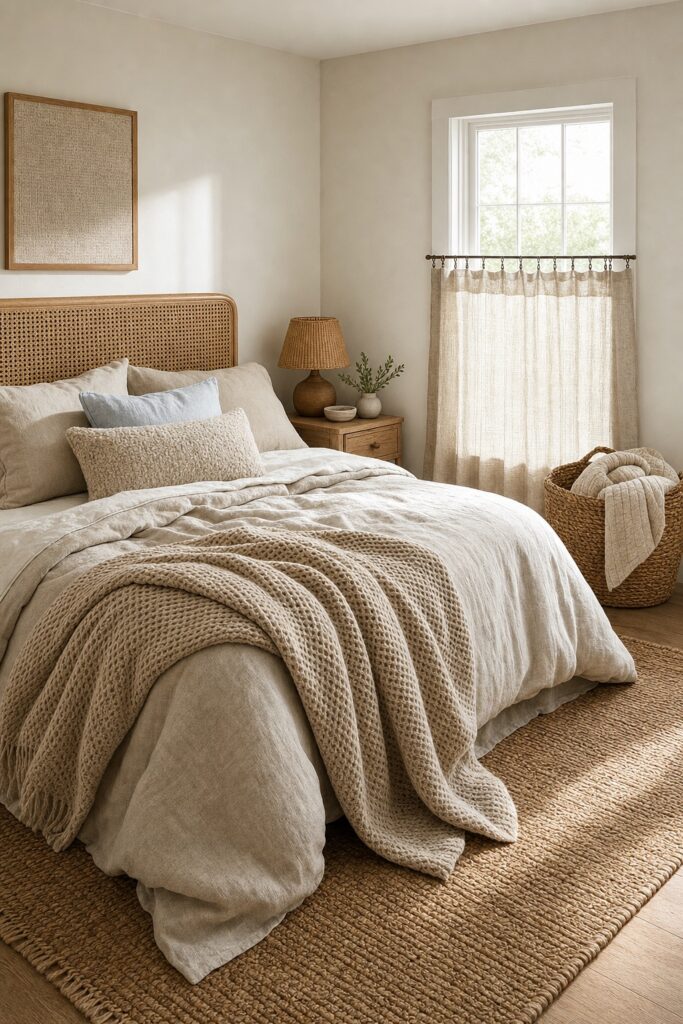
A neutral bedroom can change through fabric weight and surface, with very little added color. A visibly textured blanket beside smoother bedding creates a more noticeable contrast than another small beige ornament.
Keep the combination manageable. Choose the blanket or quilt first, then decide whether a different cushion cover is still useful. You may already have enough texture from a woven headboard or an existing rug.
Check where the edges fall. Bedding trailing into the route around a small bed is something you will step over every day. Fold or size the layers around the room you use, even when a looser arrangement looks appealing in a photograph.
Borrow the small finishing pieces from another room

Move a basket, a wood tray, or a small ceramic piece before buying seasonal ornaments. Repeating a material already in the bed or furniture can make the room feel considered without a literal fall motif.
The dresser arrangement here uses a patterned runner and warm wood objects. Try one of those moves, not necessarily the full collection. Leave room for the surface's everyday job, such as a lamp or a place to set down glasses.
The candlesticks in this image are decorative objects. If you want a glow beside fabrics or dried stems, choose an appropriate flameless option instead of adding an open flame to the arrangement. Keep any lighting within its manufacturer's placement instructions.
Keep a small bedroom clear around the bed

Put the seasonal change where the room already has fabric, rather than adding another piece of furniture. A throw on the bed uses an existing surface. A decorative ladder, extra stool, or floor basket needs space of its own.
Check the route to the closet and the side where you get into bed. Remove anything that makes those movements awkward, even if it completes the photograph you were aiming for.
One visible pattern is a useful starting point in a compact room. Let the remaining layers support it. For broader furniture decisions, our small-bedroom guide helps you resolve the layout before styling it.
If you rent, keep the seasonal changes in the textiles

Bedding, cushion covers, and a removable dresser runner let you refresh the room without changing its fixed finishes. You can keep the wall color and existing window hardware while shifting the look through the pieces you take with you.
Store only what you have actually replaced. If the lighter throw still works beneath the new one, there may be nothing to put away. If you do swap seasonal bedding, clean and dry it according to its instructions before storing it somewhere suitable.
Stop when the bed feels inviting and the room still works. The next useful step is to use the new arrangement for a week, not to shop for a second round of matching objects.
FAQ
Can fall bedroom decor work without pumpkins?
Yes. Warm color, a useful bedding layer, and a few natural-looking textures can suggest the season. Literal seasonal ornaments are optional.
What if it is still warm where I live?
Change the visible color through a lightweight cover or a folded throw rather than adding heavy bedding you will not use. Let your actual room temperature guide the sleeping layers.
Do I need to replace my curtains?
No. Keep curtains that work and build the seasonal palette around them. Replacing a large textile only to match one new cushion can turn a small refresh into an unnecessary project.
What should I buy on a small budget?
First try a textile you already own in the room. If something is still missing, choose one useful layer that fits the bed, feels comfortable, and has care instructions you can manage. The number of purchases is not what makes the room feel seasonal.


