
Bamboo Spiral Garden Bed: How to Build a Two-Level Spiral That Holds Its Soil


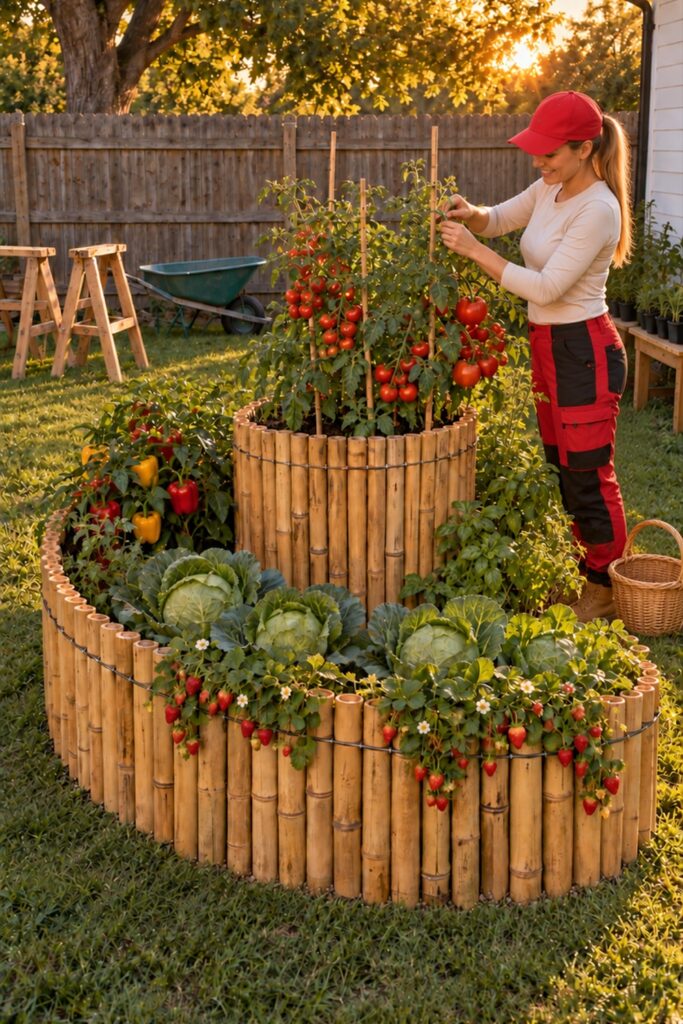
Picture an evening in early summer. You walk out with a basket, and the spiral bed by the fence is full. Tomatoes are ripening up top, peppers and cabbages grow around them, and strawberries spill over the low bamboo wall.
You pick dinner standing up, without kneeling in the dirt. Your neighbor leans on the fence and asks, "Did you build that?"
This guide contains Amazon affiliate links. As an Amazon Associate I earn from qualifying purchases, at no extra cost to you.
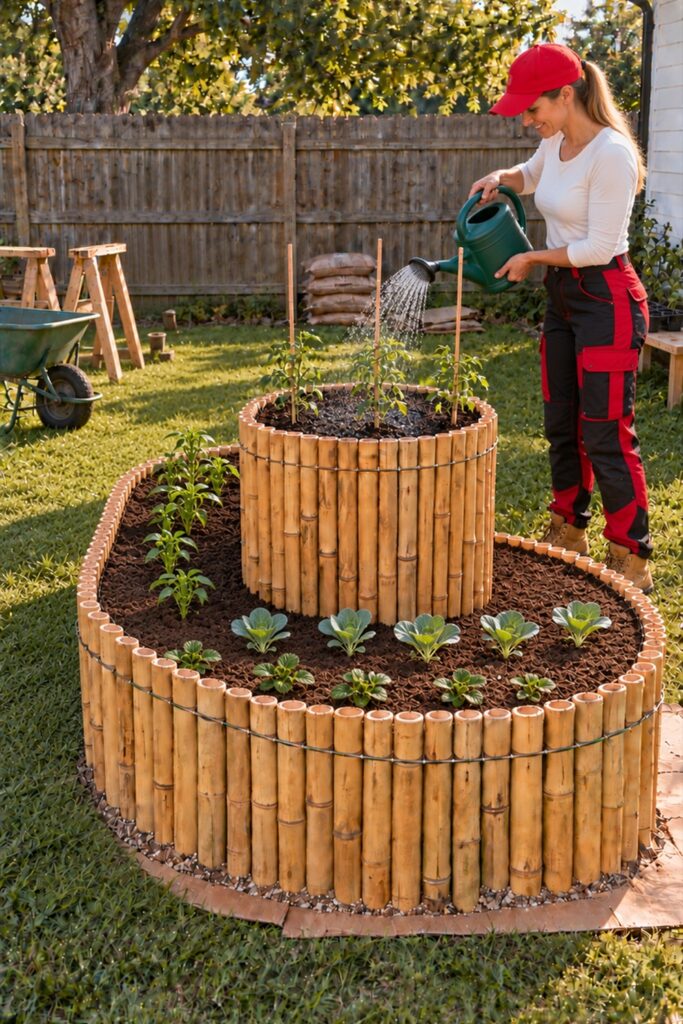
You built it yourself, from store-bought bamboo rolls. That's the bamboo spiral garden bed from our video. A tall bamboo ring, about waist high, stands inside a low bamboo wall that curls in to meet it. Tall crops go in the ring and low ones around it. You can build it in a weekend with a helper. It costs about $350 to $600, and soil is the biggest part.
When a bamboo garden bed video goes around, the comments ask the same things. Won't the bamboo rot? Won't the soil wash out? Doesn't that much soil cost a fortune? Every answer is below, with 8 steps and a picture for each, plus the five mistakes that make a bamboo bed fail.
At a glance
- Time: a weekend with a helper, plus time to gather logs and leaves
- Skill: beginner. You dig a narrow trench, staple fabric and carry soil.
- Cost: about $350 to $600, with soil the biggest part
- Best time to build: this fall. Built now, the logs, leaves and soil settle over the winter, and it's ready to plant the first warm week of spring.
Jump to a section
- How the Spiral Bed Goes Together
- What You Need, and What It Costs
- Step 1: Call 811, Then Mark the Spiral
- Step 2: Smother the Grass and Dig the Trenches
- Step 3: Add Gravel to the Trenches
- Step 4: Stand the Low Wall
- Step 5: Stand the Tall Ring
- Step 6: Line Every Wall With Fabric
- Step 7: Fill It: Logs First, Then Soil
- Step 8: Plant Tall in the Middle, Low at the Edge
- The Mistakes That Make It Fail
- Keep It Growing: Water, Soil and Bamboo
- FAQ
If you buy one thing
Don't skip the fabric
Bamboo rots where wet soil touches it. A layer of landscape fabric stapled inside every wall keeps the soil off the poles, so the bed lasts more seasons and the soil stays in.
How the Spiral Bed Goes Together

The video taps loose poles into the lawn. Here the walls come ready-made and stand in gravel trenches, and black fabric keeps the soil off the bamboo.
- The tall ring is one 4-foot roll of bamboo fence, stood up and closed into a 30-inch circle. Set 6 inches deep, it stands about 42 inches tall, so you harvest without bending.
- The low wall is three 8-foot rolls of 12-inch bamboo border. It runs in a ring about 6 1/2 feet across, and its end curls in to meet the tall ring. Set 3 inches deep, it stands about 9 inches tall.
- Logs and branches fill the bottom of the tall ring, and leaves fill the bottom of the low ring. Soil goes on top, and black fabric lines every wall.
Untreated bamboo in wet soil often lasts only 1 to 3 years. The gravel and the fabric keep it drier, but plan on a few seasons, not decades.
What You Need, and What It Costs

- Rolled bamboo fence, 4 feet tall and 8 feet long, for the tall ring.
- Bamboo edging, three 8-foot rolls, 12 inches tall, for the low wall.
- Landscape fabric, one 3 x 50-foot roll, to line every wall.
- Pea gravel, about three bags of 0.5 cubic feet, for the trenches.
- Galvanized wire, 14-gauge, to close the ring and band it.
- Raised bed soil, about 18 to 20 cubic feet.
- Staple gun with 1/2-inch staples.
- Plain brown cardboard, plus logs, branches and leaves from the yard.
- Tools: spade, rake, tape measure, string and stakes, marking paint, wire cutters, wheelbarrow and gloves.
What it costs: about $350 to $600 in all. That's with prices we found at US stores on October 15, 2026. The fence roll is about $94, and the three edging rolls are about $126 to $195. Fabric, gravel and wire add about $35 to $50. Soil is the rest: about $100 to $250 in bags.
Two buying tips:
- Gather logs, branches and fallen leaves before you buy soil. They fill the bottom of each ring, so you buy less.
- Pick edging made of whole round poles strung on wire, not split halves. Round poles are sturdier in a curve.
Step 1: Call 811, Then Mark the Spiral

- Call 811 a few business days before you dig, and wait for the utility marks.
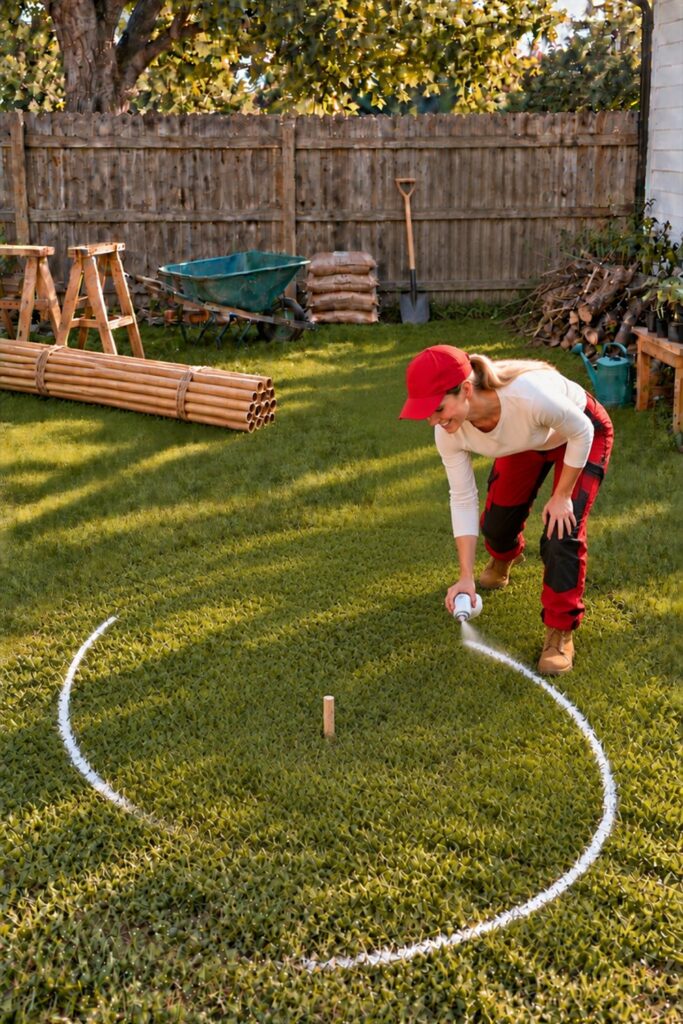
- Push a stake into the middle of the spot, tie on a 39-inch string and paint a circle for the low wall.
- Paint a 30-inch circle for the tall ring, a little toward the back.
- Paint a short curve from the front of the big circle in to the small one.
Watch out: don't skip the call, even for a shallow trench. 811 is the free national call-before-you-dig service. It says every digging project, at any depth, needs a call a few days ahead.
Step 2: Smother the Grass and Dig the Trenches
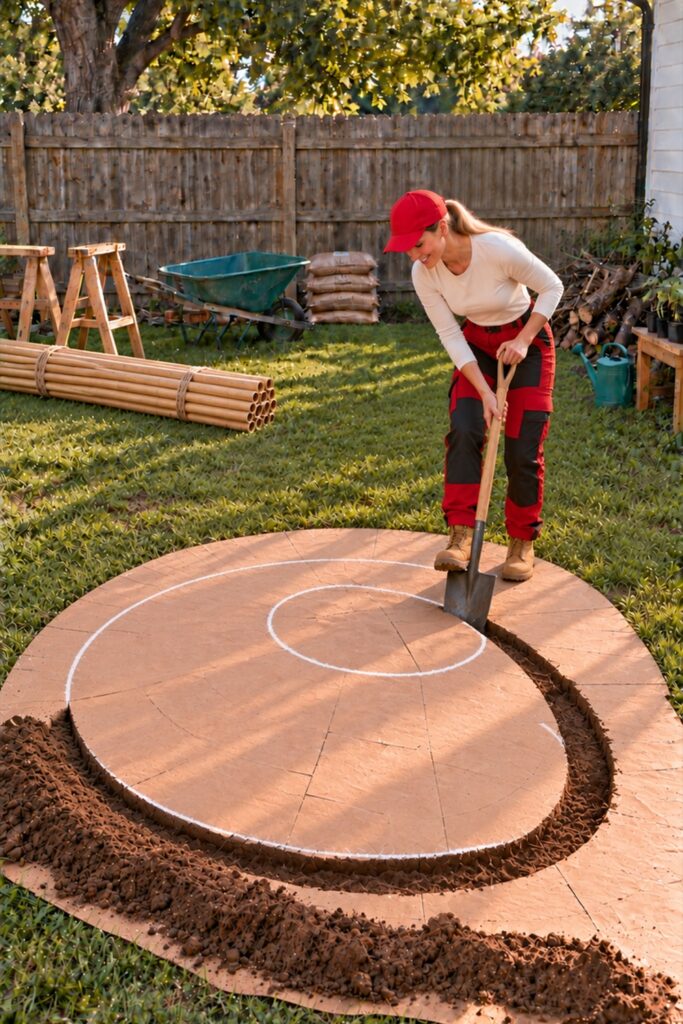
- Lay plain brown cardboard over the grass inside the circle, overlapping the edges. Peel off any tape.
- Dig a trench 5 inches deep and about 4 inches wide along the low wall's lines.
- Dig the tall ring's trench 8 inches deep.
- Pile the dirt beside each trench for later.
Watch out: lay the cardboard first. The grass dies under it, so it can't grow up through the soil.
Step 3: Add Gravel to the Trenches

- Pour about 2 inches of pea gravel into every trench.
- Spread it level with your hand.
Watch out: the gravel lets water drain away from the ends of the bamboo, the part that rots first.
Step 4: Stand the Low Wall

- Unroll the first roll of edging, and stand it on the gravel along the big circle.
- Butt the next roll against it, and twist wire around the end poles of both to join them.
- Finish the circle, then run the last of the third roll along the short curve, in toward the tall ring.
- Backfill the trench with the dug dirt, and stamp it firm with your boot.
Watch out: check that the wall stands straight up as you backfill. A wall that leans now leans more once it holds soil.
Step 5: Stand the Tall Ring

- Stand the bamboo fence roll on its end in the ring trench, and unroll it into a 30-inch circle.
- Tie the two ends together with wire at the top, the middle and the bottom.
- Wrap two loops of wire around the outside, one near the top and one halfway down, and twist them tight.
- Backfill the trench and stamp it firm.
Watch out: work with a helper. The roll springs open until its ends are tied.
Step 6: Line Every Wall With Fabric

- Cut the fabric into strips a few inches taller than each wall.
- Staple it to the inside of the bamboo, from the top down.
- Tuck the bottom edge under, against the cardboard.
Watch out: line the short curve too. Anywhere the fabric stops, wet soil touches the bamboo.
Step 7: Fill It: Logs First, Then Soil

- Drop logs and thick branches into the tall ring until it's about two thirds full, and pack small branches into the gaps.
- Spread leaves and small branches a few inches deep in the bottom of the low ring.
- Fill both with soil, watering as you go so it settles.
- Top up any soil that sinks, then rake it flat, just below the wall tops.
Watch out: the logs rot slowly, and the soil sinks as they do. Plan to top it up each spring.
Step 8: Plant Tall in the Middle, Low at the Edge
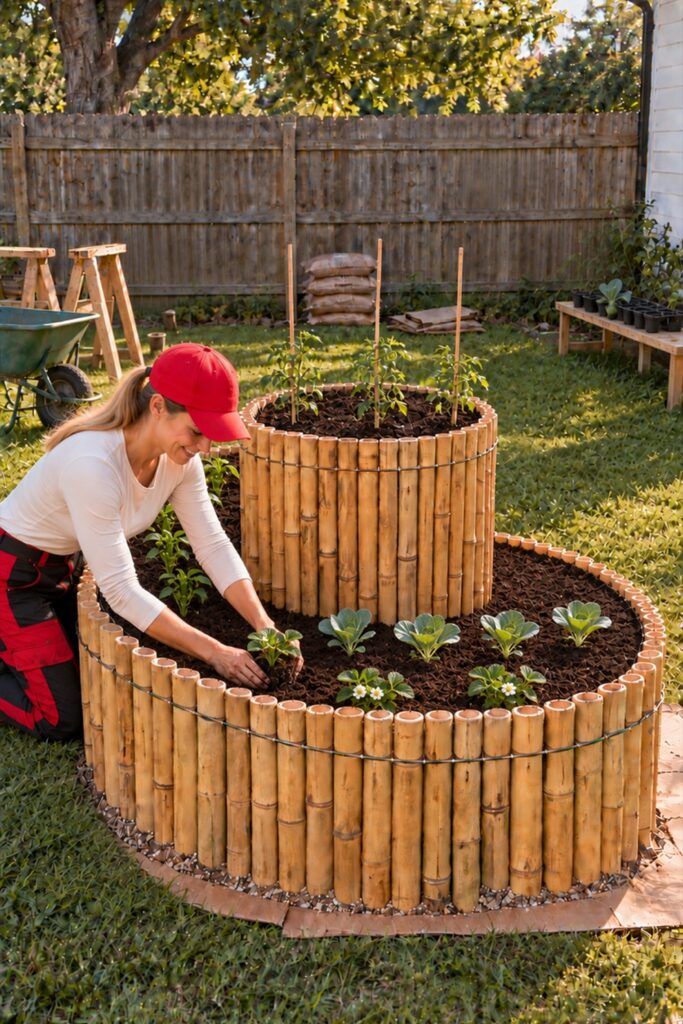
- Plant tomatoes or other tall crops in the tall ring, each with a stake.
- Plant peppers, cabbages or herbs in the low ring.
- Set strawberries along the front edge, where they can trail over the wall.
- Water the tall ring first. It sits higher and dries out faster.
Watch out: keep tall plants in the middle. At the edge, they shade everything behind them.
Then come back in early summer with a basket. Picking dinner standing up, with the tomatoes at waist height, is the whole point of building it tall.
The Mistakes That Make It Fail
These five come up again and again under bamboo bed videos, and each one has a simple fix:
- Bare bamboo in wet soil. It can rot in a season or two. Stand it on gravel and line it with fabric.
- Poles just tapped into the lawn. They lean as soon as the soil goes in. Set every wall in a backfilled trench.
- Soil with nothing holding it. It washes down and out. Give each level its own wall, and keep the soil below the top.
- Buying all the soil. It's the biggest cost. Fill the bottoms with logs, branches and leaves first.
- Grass left under the bed. It grows up through the soil. Smother it with cardboard first.
Get those five right for the bed in the picture: tomatoes up top, cabbages around them and strawberries spilling over the edge.
Keep It Growing: Water, Soil and Bamboo
- Water: water the tall ring first, then the low ring, in the morning.
- Soil: top it up each spring as the logs settle, and mix in compost.
- Bamboo: check the walls each spring, and replace a section of edging when it turns soft.
- Winter: pull the spent plants in fall, and cover the soil with leaves.
Then wait for the first neighbor who asks for a tomato. For spring flowers to go with it, see our heart-shaped tulip bed.
Watch this build, and the next ones, on YouTube, Instagram and Facebook.
Start here
Want tomatoes at waist height next summer? Build it this fall, and start with the fabric: it's the part that keeps the bamboo going.
FAQ
How Long Does a Bamboo Garden Bed Last?
Untreated bamboo in wet soil often lasts only 1 to 3 years. Gravel under it and fabric inside it help, but expect to replace sections after a few seasons.
Will Bamboo Poles Take Root in the Garden?
No. Cut, dried bamboo poles are dead wood, and they can't sprout.
How Much Soil Does a Spiral Garden Bed Need?
About 18 to 20 cubic feet for this size, once logs and leaves fill the bottoms. That's about 12 to 14 bags of 1.5 cubic feet.
What Grows Best in a Spiral Garden Bed?
Tall crops in the middle and low ones around them. The tall ring dries out first, so it also suits herbs like rosemary and thyme.
Do You Need to Line a Bamboo Raised Bed?
Yes, with landscape fabric. It keeps wet soil off the bamboo and stops soil from washing out between the poles.


