
Side Yard Walkway: How to Turn a Weedy Strip Into a Stepping Stone Path

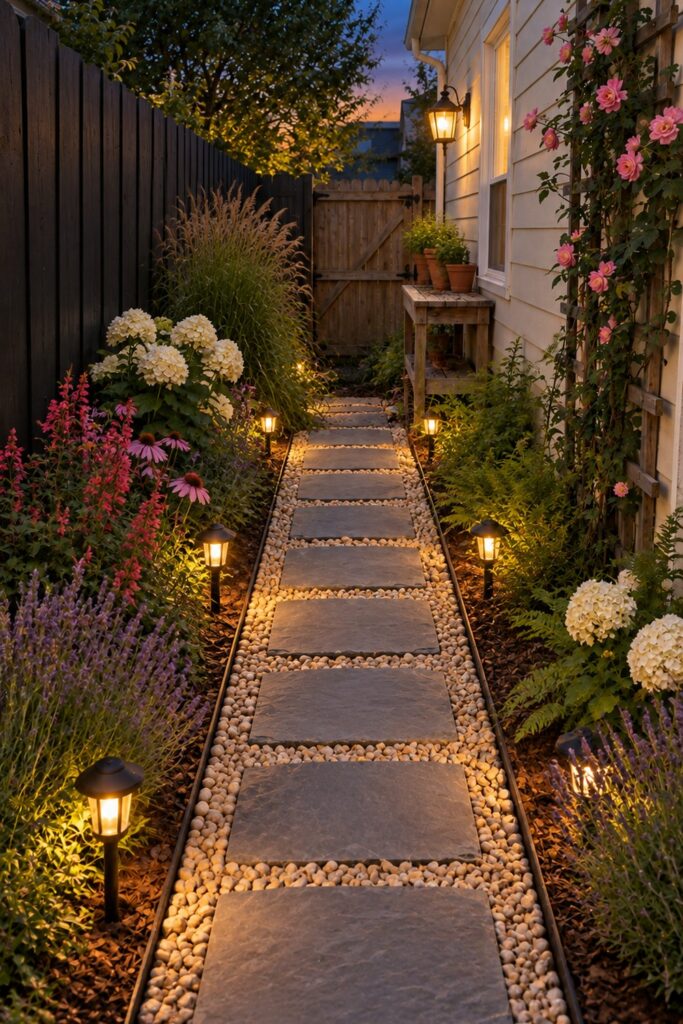

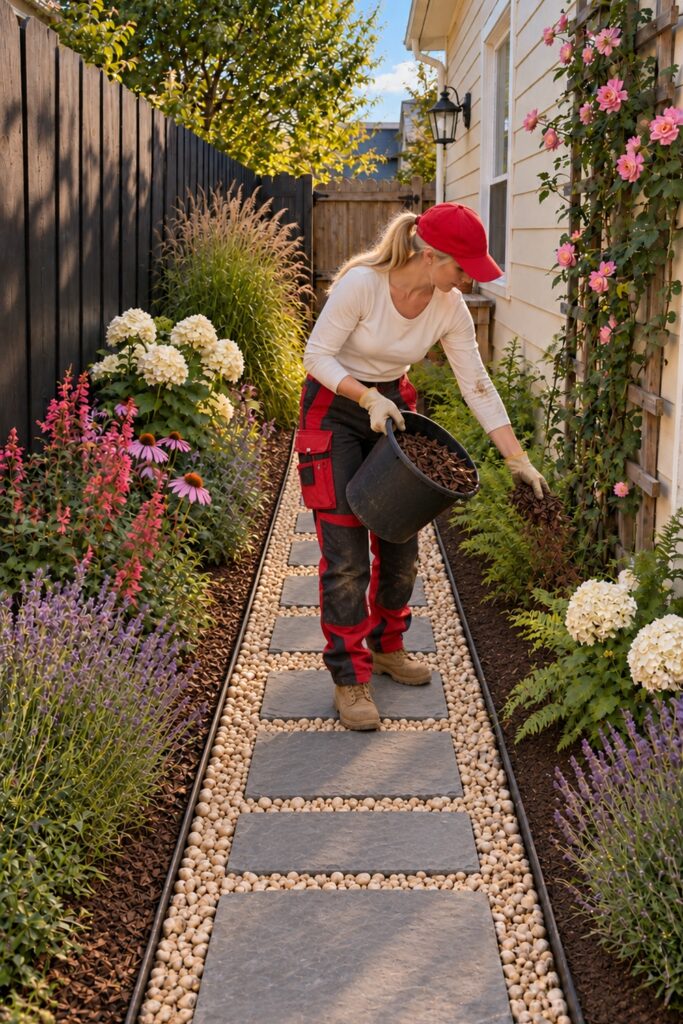
Picture a warm evening next spring. You step out the side door, and the narrow strip that used to be knee-high weeds is now a path of pale stones through white gravel.
Lavender and white hydrangeas line both sides, little lights glow along the edge, and the old potting bench is still there at the end. Your neighbor leans over the fence: "Who did your landscaping?"
This guide contains Amazon affiliate links. As an Amazon Associate I earn from qualifying purchases, at no extra cost to you.
That's the side yard walkway from our video. A strip of weeds becomes a black fence, two beds of flowers and a stepping stone path set in gravel, with edging to keep it all neat. You can do it yourself over a weekend. For a path about 14 feet long, the stones, gravel and fence stain are most of the cost, and the whole job comes to about $200 to $450, not counting the plants.
When a side yard video goes around, the comments ask the same things. Won't the weeds come right back? What's under those stones? Couldn't you keep something for the bees? Every answer is below, with 7 steps and a picture for each, plus the five mistakes that turn a new path into weeds by summer.
At a glance
- Time: a weekend: one day to clear, clean and paint, one day for the path and the beds
- Skill: beginner, but real yard work. A string trimmer and a pressure washer do the heavy parts.
- Cost: about $200 to $450 for a path about 14 feet long, not counting plants, mulch and tools
- Best time to build: this fall. On Pinterest, searches for side yard ideas climb from late January to a peak in late May, and garden path ideas peak in mid March. Built now, it's finished before spring, when everyone else starts planning theirs.
Jump to a section
- How the Side Yard Walkway Goes Together
- What You Need, and What It Costs
- Step 1: Clear the Weeds, Roots and All
- Step 2: Wash the Fence, Then Stain It Black
- Step 3: Rake the Ground Level and Tamp It Firm
- Step 4: Mark the Path and Stake the Edging
- Step 5: Pin Down the Weed Fabric
- Step 6: Set the Stones on Sand, Then Pour the Gravel
- Step 7: Plant the Beds and Add the Lights
- The Mistakes That Make It Fail
- Keep the Side Yard Path Neat
- FAQ
If you buy one thing
Start with heavy-duty weed fabric
It is what keeps weeds from coming back between the stones, the top worry in the comments. Overlapped and pinned, it keeps the strip neat.
How the Side Yard Walkway Goes Together

The path is layers, from the soil up, and the edging holds them in place.
- The soil is cleared of weeds, roots and all, then raked level and tamped firm.
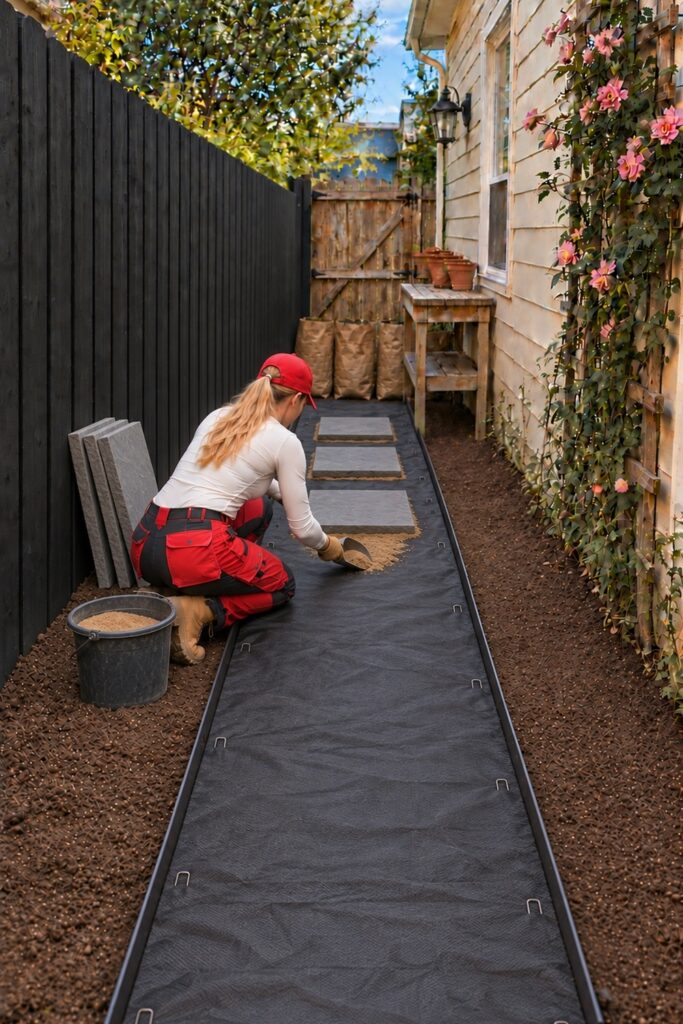
- Edging stakes down both sides of a 30-inch path, and weed fabric covers the ground between them.
- Stepping stones sit on 1 inch of sand, every 24 inches, with 2 inches of gravel around them. Flower beds run along both sides.
In the original video, the stones seem to land straight on the dirt. Here they sit on sand over weed fabric, which is what stops the weeds from coming back between them.
What You Need, and What It Costs
- Step stones, seven, about 16 inches across.
- Pea gravel or white gravel, about eight bags of 0.5 cubic feet.
- Landscape edging, enough for both sides, about 28 feet, with its stakes.
- Landscape fabric, one roll about 3 feet wide, plus landscape staples.
- Sand, two bags, for the stone beds.
- Fence stain, one gallon of solid black exterior stain, and a roller.
- Solar path lights, one 6-pack.
- Plants and mulch for the beds: lavender, salvia, a white hydrangea, and bark mulch.
- Tools: string trimmer, pressure washer (rent one if you need to), rake, hand tamper, shovel, stakes and string, tape measure, rubber mallet, level, gloves and safety glasses.
What it costs: about $200 to $450 in all for a path about 14 feet long, not counting plants, mulch and tools. That's with prices we found at US stores on October 21, 2026. The stones are about $42 to $140 and the gravel about $32 to $104. The edging, fabric and sand are about $65 to $130. The fence stain is about $36 to $52 and the solar lights about $20 to $28.
Two buying tips:
- Lay the stones out on the ground before you buy the last ones. Walk them at your normal stride, and buy the number that fits your path.
- Pick gravel that packs, like pea gravel, over big round stones. It stays put underfoot and doesn't roll onto the stones.
Step 1: Clear the Weeds, Roots and All
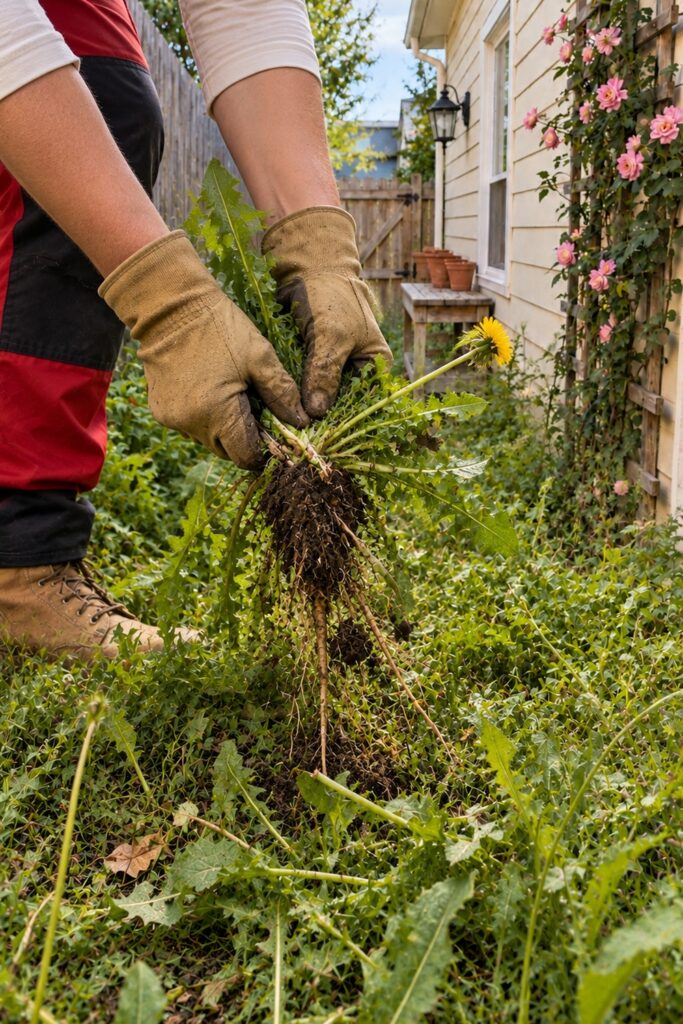
- Cut the tall weeds down with the string trimmer, wearing safety glasses.
- Pull what's left by hand, roots and all, after a rain when the soil is soft.
- Rake everything into yard bags, and keep any plants worth saving.
Watch out: pull the roots, not just the tops. Cut weeds grow back through the gravel within weeks.
Step 2: Wash the Fence, Then Stain It Black
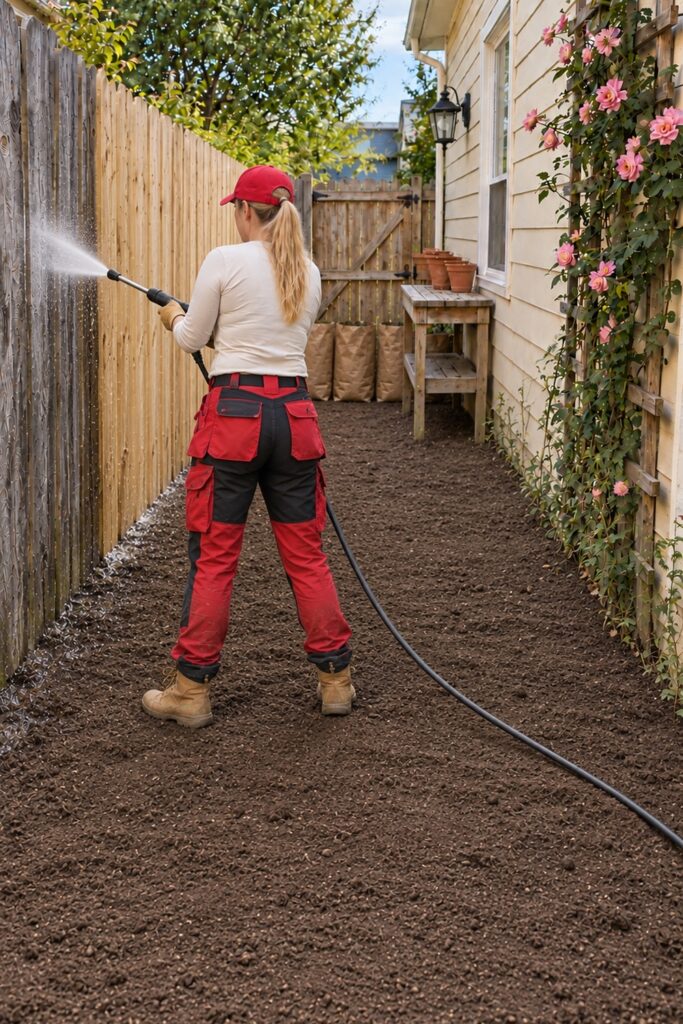
- Pressure-wash the fence from top to bottom, and let it dry for a day.
- Roll the black stain on, a few boards at a time, along the grain.
- Brush the stain into the gaps and the edges the roller misses.
Watch out: a pressure washer is stronger than it looks. The CDC's pressure washer safety page warns that the spray can cause serious wounds that look minor at first, and that gas washers must run outdoors, at least 20 feet from windows and doors. Never point the spray at anyone, including your own feet.
Step 3: Rake the Ground Level and Tamp It Firm

- Dig the path area about 2 inches down, so the gravel will sit level with the beds.
- Rake the soil smooth, with a slight fall away from the house.
- Tamp it firm with the hand tamper, overlapping each pound.
Watch out: slope the ground away from the house, never toward it. Rain should run off to the fence side, not toward the foundation.
Step 4: Mark the Path and Stake the Edging
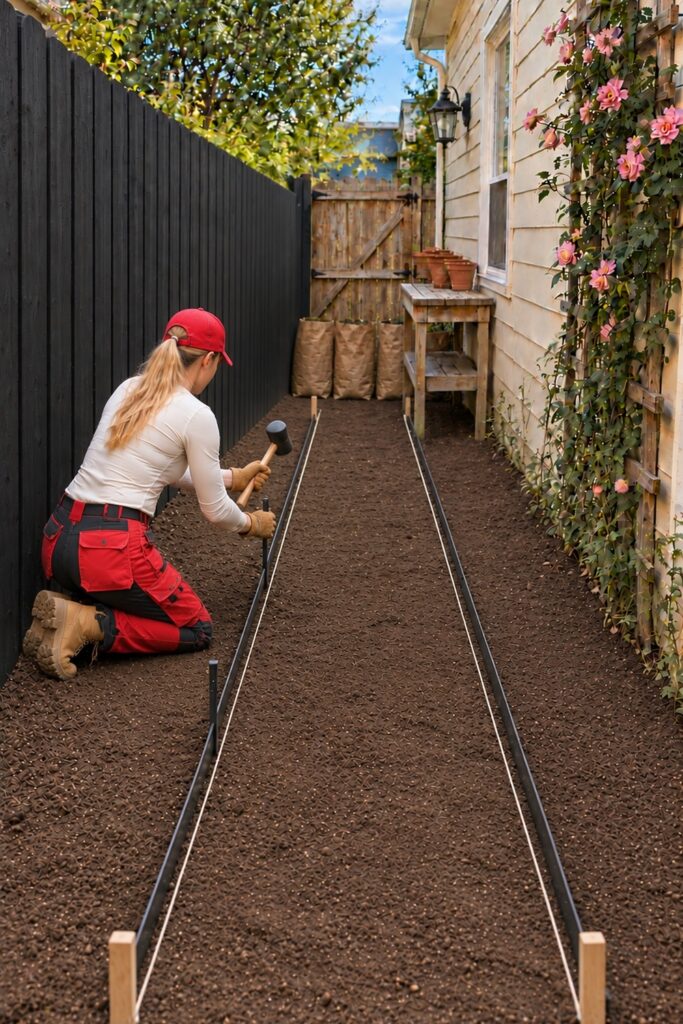
- Call 811, the free dig line, two or three working days before you drive any stakes.
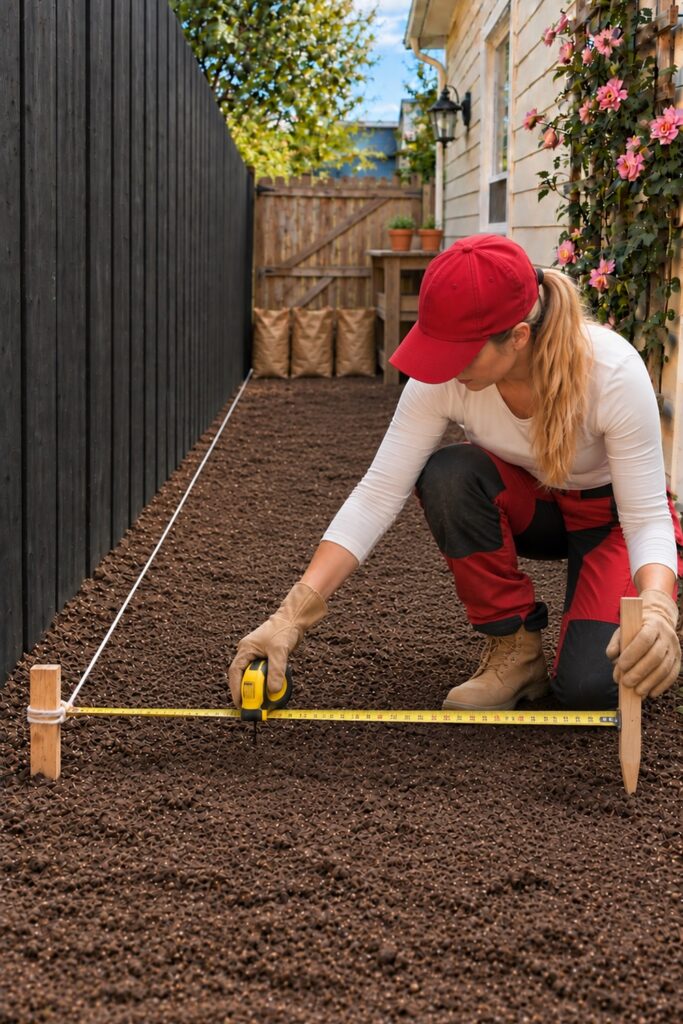
- Stretch two strings along the strip, 30 inches apart.
- Lay the edging along each string and stake it every few feet, with its top about 1/2 inch above the soil.
Watch out: don't skip the 811 call. Gas and power lines often run along the side of a house, right where this path goes.
Step 5: Pin Down the Weed Fabric
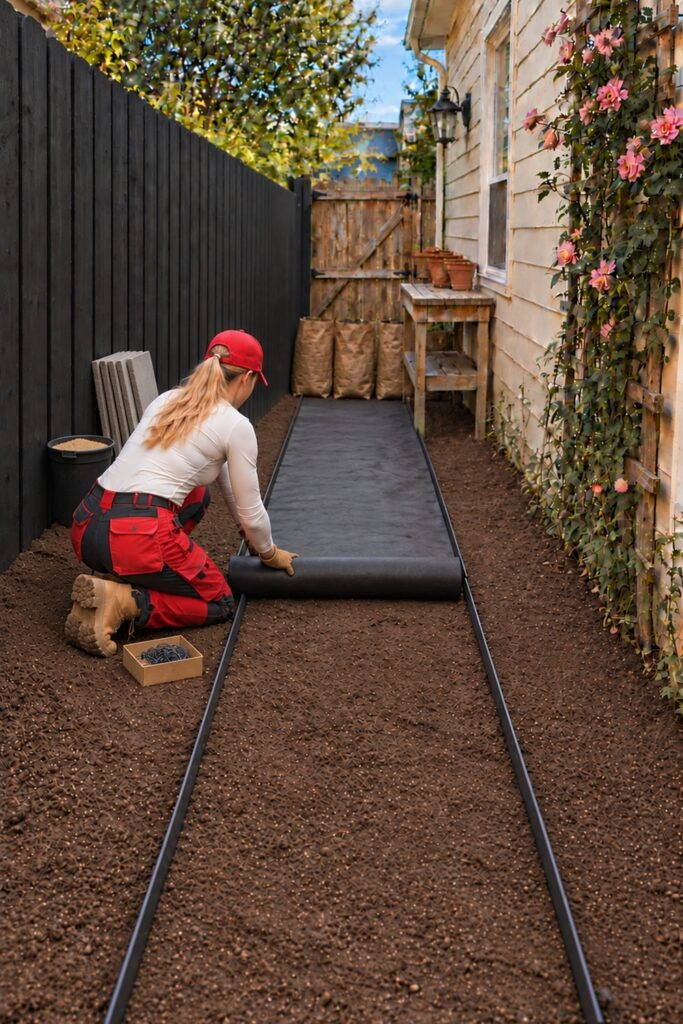
- Unroll the landscape fabric between the edging, overlapping strips by 6 inches.
- Pin it every few feet with landscape staples.
- Tuck the edges under the edging, so no soil shows at the sides.
Watch out: overlap every seam. Weeds find any gap in the fabric and come up right there.
Step 6: Set the Stones on Sand, Then Pour the Gravel

- Pour a 1-inch bed of sand on the fabric for each stone, every 24 inches.
- Set each stone, tap it level with the rubber mallet and check it with the level.
- Pour the gravel around the stones, and rake it level just below their tops.
Watch out: walk the stones before the gravel goes in. Move any stone that doesn't land under your foot at a normal step.
Step 7: Plant the Beds and Add the Lights
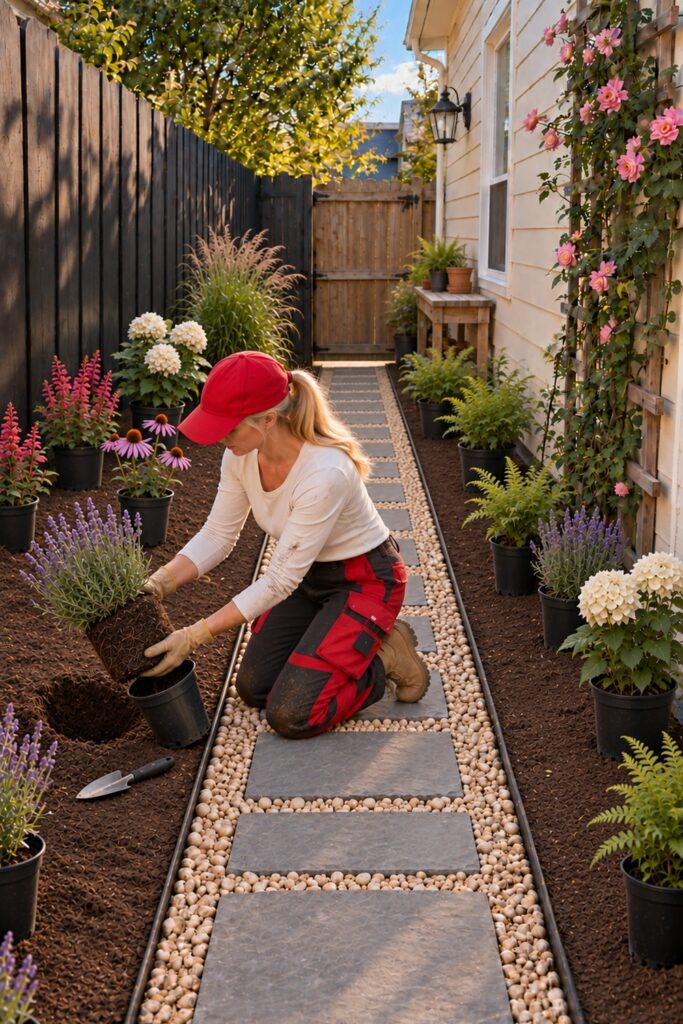
- Set the plants out in their pots first, taller ones near the fence, then plant them.
- Spread 2 inches of bark mulch over both beds.
- Push the solar lights into the bed edges along the path, where they get afternoon sun.
Watch out: plant for the bees as well as for looks. Lavender and salvia bring pollinators, and keeping an old bench or a climbing rose keeps the strip from feeling brand new.
The Mistakes That Make It Fail
People who see a new side yard path look for what's going wrong. These five give it away by summer:
- Weeds cut, not pulled. They grow back through the gravel. Pull the roots.
- No weed fabric. Overlap and pin it, and tuck it under the edging.
- Stones on bare dirt. Set each one on a sand bed, level.
- Ground sloping toward the house. Rain should run away from the foundation.
- No 811 call. Stakes and lines meet along house walls. Call first.
Get those five right, and the path stays neat for years, not weeks.
Keep the Side Yard Path Neat
- Rake the gravel back into place once a month, and pick out leaves before they rot into soil.
- Pull any weed that shows while it's small, roots and all.
- Top up the mulch each spring, and the gravel every few years.
- Wipe the solar lights' panels now and then, so they charge fully.
Then wait for a warm evening, walk the stones out to the potting bench, and let the neighbor ask who did it.
Watch this build, and the next ones, on YouTube, Instagram and Facebook.
Start here
Want the path finished before spring? Start with the fabric: the rest is stones, gravel and one weekend.
FAQ
How Do You Keep Weeds Out of a Gravel Path?
Pull the weeds with their roots, then lay landscape fabric, overlapped and pinned, under the gravel and stones.
How Far Apart Should Stepping Stones Be?
About 18 to 24 inches from center to center, depending on your stride. Walk them before you set them.
What Goes Under Stepping Stones?
A 1-inch bed of sand on weed fabric. Tap each stone level so it doesn't rock.
How Wide Should a Side Yard Path Be?
About 30 inches is comfortable for one person, with room for beds on both sides of a narrow strip.
Do I Need to Call 811 Before Building a Path?
Yes, if you dig or drive stakes. It's free, and most states ask for two or three working days' notice.
How Much Does a Side Yard Makeover Cost?
About $200 to $450 for a path about 14 feet long, at US store prices in October 2026, not counting plants and mulch.


