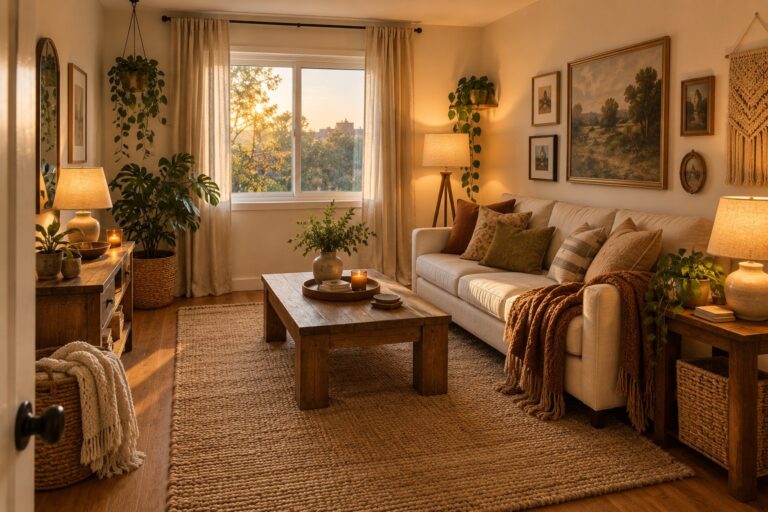
Small Apartment Decor Ideas That Make Every Room Flow

Here's the whole idea in one line: decorate the apartment, not the rooms. The small apartments that feel calm and grown-up don't have tinier furniture or a stricter beige palette. They follow one plan from the front door to the bed.
Without that plan, every room gets solved on its own, and the place ends up feeling like a set of rooms that never met. With it, a small apartment can be colorful, collected, minimal, or vintage, and still look meant.
This guide contains Amazon affiliate links. As an Amazon Associate I earn from qualifying purchases, at no extra cost to you.
The plan has four parts: clear walking routes, furniture that fits its real footprint, storage where the mess actually happens, and one visual thread that runs through every room. And the order matters. Buy the pretty pieces before the layout works and you end up with more stuff and the same problems.
Jump to a section
- Start With a Floor Plan, Not a Shopping List
- Give Every Activity a Visible Zone
- Choose Furniture by Footprint, Not Category
- Repeat One Visual Thread From Room to Room
- Put Closed Storage Where Visual Noise Collects
- Protect the Windows and the Longest Sightline
- Layer the Lighting by Job, Not Fixture Type
- Make Fewer, Larger Decorating Gestures
- Let the Entry and Kitchen Earn Their Footprint
- Make Permanent-Looking Choices Without Permanent Changes
- Follow This Small Apartment Decor Order Room by Room
- FAQ
Start With a Floor Plan, Not a Shopping List
Measure the apartment and the furniture you already own before you buy one more piece. A simple sketch should show the doors and how they swing, the windows, outlets, radiators or vents, and the paths you walk from the entrance to the kitchen, bathroom, bed, and sofa.

Then draw each big item as a measured rectangle, including the space a dining chair needs when it's pulled out and the swing of a cabinet door or a storage ottoman lid. A dresser can fit against a wall and still be wrong if its open drawers block the only way to the closet.
Next, the tape test. Mark the sofa, table, or rug footprint on the floor with painter's tape and live around it for a day. If you keep stepping over the tape or turning sideways, the real thing will be worse, and you'll know before it's delivered. It's more honest than any listing photo shot with a wide lens.
Keep the route you walk most every day direct. You don't need an empty racetrack around every wall, but you shouldn't have to slalom between the coffee table, a dining chair, and the laundry basket. Every rug, lamp, and side table depends on that route, so fix it first.
Just moved in? The free checklist below sorts what you need this week from what can wait until the plan is clear.

Give Every Activity a Visible Zone
A zone is just a few things grouped so one activity is obvious. A rug and a sofa make the living zone. A small table, a lamp, and two chairs make the dining zone. A desk, a task light, and one spot for supplies make the work zone.

In a studio, the edges can come from the back of a sofa, the edge of a rug, a low open shelf, or a curtain you can pull aside. A good divider says where one activity ends without stealing the light. A tall solid bookcase gives privacy, but it can also turn one bright room into two dim ones.
Put the most private activity at the quietest end when you can; a bed feels more settled away from the front door. And if the main room has to hold several jobs, give the most floor to what you actually do most, not to the formal dining setup you use twice a year. For the seating itself, our small living room guide walks through the layout.
Choose Furniture by Footprint, Not Category
The right small-apartment furniture isn't automatically the smallest in the store. One comfortable sofa can take less floor, and look less cluttered, than a loveseat, two spare chairs, a pouf, and three little tables. Measure the whole arrangement, not each piece alone.

Watch depth as closely as width. A shallow console can save a hallway that a standard dresser would pinch. A round table softens a tight corner, while a narrow rectangular one can tuck neatly against a wall. Let the plan decide.
Two-in-one furniture earns its space only when you'll really use both jobs. A storage ottoman works if you need a footrest and a home for blankets; a heavy convertible you'll never bother to open is really just one thing. Before you order, measure the way in too: doorways, stairs, elevators, and tight turns. Keep those numbers on your phone so a marketplace bargain doesn't end up on the curb.
Repeat One Visual Thread From Room to Room
Rooms feel connected through repetition, not a matching set. Pick a small group of things that can show up everywhere: one main wood tone, one metal finish, a quiet base color, and one or two accents. Each room uses them in different amounts.

An olive living-room chair might echo in an olive stripe on the bed, a tea towel in the kitchen, and a small print in the hall. Warm oak can repeat in a coffee table, picture frames, and a bathroom stool without any of them coming from the same collection.
Focus the thread where you can see two spaces at once. If the sofa faces the kitchen, those two need the closest relationship; a closed bedroom can wander a little more. Not sure where to start? Pull the palette from something you already love, like a rug, a quilt, or a piece of art. Then every future purchase has a test: it doesn't have to match, but it should get along with what's there.
Put Closed Storage Where Visual Noise Collects
Open storage is for things worth seeing; closed storage is for the small, practical things that multiply. Books, pottery, and a few favorite objects make an open shelf personal. Chargers, medicine, mail, and cleaning supplies make the same shelf look unfinished.

For one week, watch where piles form. The entry might need a closed shoe cabinet and a tray for keys; the sofa might need one basket for throws and controllers. Storage works best exactly where the mess already happens. Then sort by how often you use things: daily items within easy reach, occasional ones higher up, seasonal and backup ones under the bed.
Don't turn every free wall into shelving; a small home still needs places for the eye to rest. Swapping three scattered pieces for one larger cabinet often frees more space than it takes, and our closet organization plan can absorb a lot of the overflow.
Protect the Windows and the Longest Sightline
Keep your brightest window and the longest view through the apartment as open as you can. Light can't travel past a tall cabinet in front of the window or a solid divider through the middle of the room. Keep low furniture near the view and tall storage on solid walls.

The longest view is usually from the front door through the living room, or from the sofa to a window. Give it a calm place to land, like a plant, one piece of art, a tidy dining corner, or the window itself, rather than the side of a bulky shelf.
A mirror helps when it reflects daylight or a view you like, so check what it will actually show; across from a window can also mean across from the TV. A leaning mirror needs a secure stand or restraint, especially around kids and pets. And let curtains stack mostly beside the glass, clear of radiators, heaters, and vents.
Layer the Lighting by Job, Not Fixture Type
Give each zone the light it needs instead of asking one ceiling fixture to light the whole apartment. The sofa wants soft light, a desk or counter wants focused light, and a dark corner may need a floor lamp just to balance the room after sunset.

In rooms you see together, keep the bulbs' color consistent. ENERGY STAR's lighting guidance explains that lower Kelvin numbers on the box look warmer and higher ones look cooler. You don't need one exact number everywhere, but two lamps side by side shouldn't look like sunset and an office at noon.
Keep switches and cords easy; a lamp you have to crawl behind the sofa to turn on won't get used. Cords should never run under rugs or across walking paths. Then do the evening test: switch off the overhead light. If the kitchen becomes unusable or the reading chair goes dark, add light there before you buy anything decorative.
Make Fewer, Larger Decorating Gestures
A small apartment can handle bold decor; what it can't handle is dozens of unrelated little things. One rug that properly holds the seating, one generous piece of art, or one full pair of curtains gives the eye a complete shape. A scatter of tiny rugs and frames breaks the same room into pieces.

Give each view one strong moment, like a big textile above the sofa, a patterned quilt on the bed, or one accent color carried through a kitchen runner, and let the quieter areas in between breathe. Scale matters too: art over a sofa should relate to the sofa, and a lamp should look substantial enough for its table.
Personality doesn't mean filling every shelf. Leave space around the things you love so they stand out, and if you collect, group the collection on one shelf instead of sprinkling it everywhere.
Let the Entry and Kitchen Earn Their Footprint
Some of the most useful decor in a small apartment lives by the front door and around the kitchen, because that's where daily clutter starts.

At the entry, make a landing strip that fits your actual routine: hooks for the bags you use, a shallow closed spot for shoes, a tray for keys, and a mirror if you check yourself on the way out. No hallway? The end of a rug or the back of a cabinet can mark the spot.
In the kitchen, protect one clear prep area before adding jars or trays. A rolling cart can add counter and storage, but only if it parks without narrowing the path or blocking an appliance door. Our small kitchen ideas go deeper on storage and counter space, and the peel-and-stick backsplash guide covers a bigger visual change you can still take down.
Make Permanent-Looking Choices Without Permanent Changes
A rental can feel finished before you change a single wall. Start with what leaves with you: a properly sized rug, full curtains, better lamps, framed art, a bed that looks like a decision, and storage that fits.

Check the lease and get written permission before painting, mounting hardware, changing fixtures, or putting up a large adhesive product. “Removable” describes the product, not your wall, so test somewhere hidden and follow the maker's prep and removal steps.
Safety comes before the promise of zero holes. Tall dressers, bookcases, and TVs can tip, and the U.S. Consumer Product Safety Commission recommends anchoring furniture and TVs, especially around children. Ask your landlord about an approved way to anchor rather than leaving a risky piece loose. For the wet room, our rental bathroom makeover plan has a no-renovation sequence, and the small bedroom guide covers layouts that don't need built-ins.
Follow This Small Apartment Decor Order Room by Room
Work in the order you see and use the apartment, and finish one layer before starting the next, so the budget doesn't vanish into accessories while the daily problems stay put.

- Map the whole apartment: measure, draw the routes, and pick the most important zone in each room.
- Fix the main living area: place the biggest seat, set the rug's edge, and protect the route through it.
- Set up the entry: shoes, keys, bags, and mail each get a contained landing place.
- Calm the bedroom: make the bed the anchor, contain the clothes, and keep the path from the door open.
- Clear the kitchen work zone before adding any decor or furniture.
- Contain the bathroom: keep the counter useful and move backups behind doors.
- Repeat the visual thread through the rooms you can see together.
- Add lighting and personality last: fix the dark spots, then the art, textiles, plants, and collections that make it yours.
Before you start, take one photo from your front door. When you're done, take another from the same spot. Side by side, you'll see what a plan does: not a few nicer rooms, but one home.
FAQ
How Can I Make a Small Apartment Look Bigger?
Keep the main routes direct, choose furniture that doesn't crowd door swings, keep the brightest window open, and cut scattered clutter. A clear layout opens the place up before any color trick does.
What Colors Work Best for Small Apartment Decor?
Colors you enjoy, repeated on purpose: a quiet base, one wood tone, one metal finish, and one or two accents. Dark colors can work too when the lighting supports them.
How Do I Decorate a Small Apartment on a Budget?
Measure first and spend on the problems you feel every day. A well-sized secondhand table, one closed cabinet, or two good lamps usually do more than a cart of small accessories.
How Do I Create Separate Zones in a Studio Apartment?
Use rug edges, the back of a sofa, a low open shelf, lighting, or a curtain you can pull aside, and keep dividers out of the main path and away from your only daylight.
How Do I Make Different Rooms Feel Connected?
Repeat a few visible things instead of matching everything: the same warm wood, a recurring accent color, related frames, or similar textiles, especially in rooms you can see at the same time.

Free 2-page printable
Your First Night Sorted, the Rest on One List
The first-night tote, what to buy now, what can wait and the measurements to take before you shop, on two pages.
We'll also email you the next free plan and cozy home ideas. Unsubscribe any time.