
Moving Out of State: The Checklist That Starts With Subtraction

A local move forgives almost any decision. If it fits in the truck, it goes; the truck is paid by the hour, and an hour is cheap.
An out-of-state move runs on the opposite arithmetic: you're paying to push weight across hundreds or thousands of miles, and every box, bookcase, and mattress bills you again for every one of them.
That inversion rewrites the entire checklist. Locally, the smart move is "take everything, sort later." Across state lines, the smart move starts with subtraction — and continues through a set of decisions locals never face: federal moving regulations, license deadlines that start ticking on arrival, and the strange project of renting an apartment you've never stood inside.
This is the out-of-state version of the checklist, built around the mile math. For the packing-supplies layer, our moving supplies guide still applies box for box, and the countdown timeline covers the week-by-week schedule. This article covers what changes when the destination is a different state.
Jump to a section
- The rule that changes everything: distance charges by the pound
- The keep-or-replace audit
- The three ways to move it
- The federal rules your mover must follow
- Red flags that predict a bad mover
- The paperwork wave
- The overlap week
- Renting the next place sight-unseen
- The 72-hour box
- Arrival week, in order
- The one-page checklist
- FAQ
The rule that changes everything: distance charges by the pound

Interstate movers price on some combination of weight, volume, and distance — not hours. That single fact should sit behind every packing decision you make, because it means each object has a shipping cost of its own. The heavy things you barely like are the expensive things. The particleboard bookcase that survived college, the mattress past its good years, the armchair you keep meaning to replace: on a local move they ride along for free-ish; on a 1,200-mile move they each cost real money to relocate — sometimes more than replacing them near the new place.
So the first week of an out-of-state move isn't about boxes at all. It's an editing pass over everything you own, done with a colder eye than any decluttering method asks for, because this time every "keep" has a dollar figure attached. Furniture with real value — solid wood, pieces you love, anything sentimental — earns its miles. The rest is a listing photo and a porch pickup before the truck ever arrives.
The keep-or-replace audit

Run every large item through the same three questions. First: would this survive the truck? Flat-pack furniture often doesn't — it's engineered for one assembly, and racking around in a trailer for a week finds every loose joint. Second: what would it cost to replace near the new apartment — not new, but on the local secondhand market, where furniture like it sells every day? Third: does it clear the honest bar of "I'd buy this again today"?
An item keeps its seat on the truck only by passing all three. The pattern that emerges surprises most people: the keep pile ends up being your mattress-if-recent, solid-wood pieces, everything small and dense you actually use (kitchen gear, tools, books you reread), and the sentimental layer. The shed pile is dominated by big, light, cheap furniture — the exact category that's most expensive per useful dollar to ship and easiest to rebuy. Selling it isn't a defeat; it's converting dead weight into a deposit on better furniture at the destination.
The three ways to move it
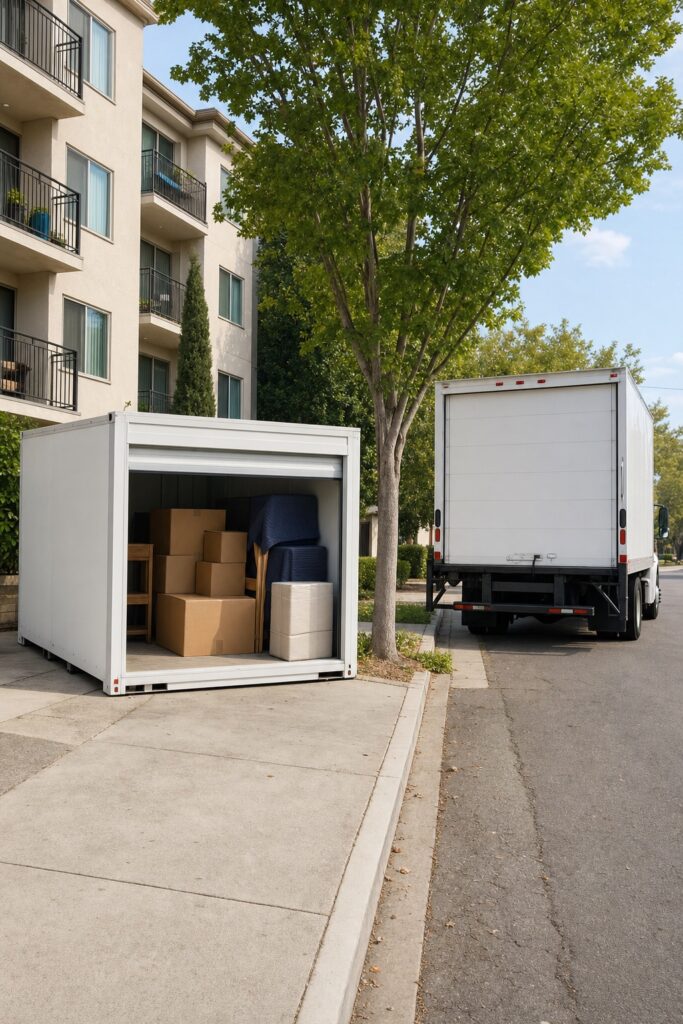
Every out-of-state move is one of three vehicles. Full-service movers load, drive, and unload — the least labor and the most money, priced on that weight-and-distance math. A portable container splits the difference: the company drops a container, you load it, they drive it, and your things wait in it if the new lease starts late. Driving a rental truck yourself is the cheapest sticker price and the most honest about what it demands — days of highway driving, fuel bills, and you unloading a truck alone in a city where you know nobody.
The right answer usually falls out of two questions: how much survives your keep-or-replace audit, and whether your move-out and move-in dates actually line up. A one-bedroom's worth of edited possessions often fits a container or even a cargo van, and the container's built-in storage quietly solves the date-gap problem that costs truck renters a month of storage-unit fees. Price all three for your real inventory — after the audit, not before. The audit routinely knocks a move down a full vehicle size, and that's where the serious money is saved.
The federal rules your mover must follow

The moment a mover crosses a state line, your move falls under federal jurisdiction, and you gain a set of protections most customers never learn about. Interstate movers must be registered with the Federal Motor Carrier Safety Administration and carry a USDOT number you can look up for free in the agency's mover-search tool — an unregistered "mover" is disqualified before any quote matters. Registered movers owe you a written estimate, and federal rules cap what a mover can demand at delivery: with a non-binding estimate, you're entitled to your belongings on paying no more than 110 percent of that estimate. They're also required to give you the FMCSA's "Your Rights and Responsibilities When You Move" booklet — a mover who's never heard of it is telling you something.
None of this applies to a move within one state, which is exactly why the interstate rules are worth knowing: they're the difference between a negotiation and a hostage situation if the price changes at the far end. Verify registration, insist on the written estimate, and keep both documents where the driver isn't.
Red flags that predict a bad mover

The complaints that reach regulators cluster around the same patterns, and all of them show up before moving day if you look. A quote over the phone with no visual survey of your things — legitimate estimators want to see the inventory, in person or by video, because the estimate is built from it. A demand for a large cash deposit up front. A company with no physical address, a name that keeps changing slightly between the website and the paperwork, or trucks with no company markings. A price dramatically below every other quote — on identical weight and miles, a wildly cheaper number isn't efficiency, it's bait.
The defense costs one evening: get written estimates from three registered companies, check each USDOT number, and read complaint histories. Boring diligence, but it front-loads all the drama into a week when you can still walk away — which is the only week it's cheap to.
The paperwork wave

Crossing a state line resets more of your administrative life than most checklists admit, and several clocks start on arrival day. A new state means a new driver's license and, if you own a car, new registration and new insurance — and the deadlines are commonly measured in weeks, not months, so look up the new state's DMV rules before the move instead of during the chaos after. Voter registration starts over. Mail forwarding is the one piece you can set up in five minutes: file the USPS change of address with your move date, and it follows you while you update everything else at its own pace.
The quiet trap in the wave is auto insurance: your current policy is priced for your current state, rates can differ sharply, and insurers expect prompt notice of an interstate move. Call before you go — an insurance surprise is much easier to handle as a quote than as a denied claim.
The overlap week

Somewhere in every out-of-state move there's an overlap week — or worse, a gap week — between the lease you're leaving and the lease that hasn't started. It's the most expensive week of the move if you improvise it, and nearly free if you plan it. Utilities want shutoff dates at the old place and start dates at the new one; renter's insurance needs the new address on the policy before your belongings arrive, not after; and the security-deposit walkthrough at the old apartment deserves the full photo treatment, because you won't be an hour's drive away to dispute a claim later.
If the dates truly can't be made to touch, this is where the container option quietly wins the whole comparison, holding your loaded belongings in the gap. For the humans, a gap week is a friend's couch or a cheap week somewhere between cities. For a truck full of furniture, it's a storage unit, a second load, and a second unload — the exact scenario the audit-and-container path was designed to avoid.
Renting the next place sight-unseen

Renting from three states away is now normal, and mostly fine — with a short protocol. Insist on a live video tour, not a pre-recorded one: you direct the camera, into the water pressure, the closet depth, the view out each window, the street noise with the window open. Cross-check the address against street view and the listing photos, and confirm the person you're speaking to is connected to the property manager the building actually uses. Read the lease in full before any money moves.
The scam filter is one rule: never send money to someone who cannot or will not show you the unit live. "The tenant is still in it," "I'm out of the country, just wire the deposit" — these are the oldest lines in rental fraud, aimed precisely at long-distance renters who can't drop by. A legitimate landlord dealing with out-of-state tenants has a process for exactly your situation. Once you've signed, our first apartment guide covers making an unseen unit yours once you're finally standing in it.
The 72-hour box

Your belongings and you are traveling separately now, and depending on the vehicle you chose, the truck can arrive days after you do. So pack one box — a bin or a big duffel that rides in your car or flies with you — that runs your life for three days in an empty apartment: documents (lease, IDs, the mover's estimate and inventory), medications, chargers, basic toiletries, two changes of clothes, an air mattress or bedroll, one towel, one pot or kettle, one mug and utensil set, toilet paper, and a shower curtain if the bathroom needs one.
The document layer matters most and weighs least: everything you'd need if the truck simply didn't show up for a week lives with you, never in the truck. People who've done an interstate move once pack the 72-hour box first, before a single moving box — it's the difference between camping comfortably in your new place and buying a phone charger at a gas station at 11 p.m.
Arrival week, in order

Week one at the destination has its own sequence. Before the truck arrives: photograph the empty apartment (the move-in condition record that protects the new deposit), confirm the utilities actually turned on, and locate the building's loading rules — an unbooked freight elevator has delayed many a delivery. At delivery: check the inventory list as boxes come off, note anything damaged on the paperwork before signing, because that notation is what a claim later stands on.
After the truck leaves, resist the urge to decorate first. The paperwork wave from three sections ago has deadlines; the gallery wall doesn't. License and registration appointments, insurance updates, voter registration — clear them in the first two weeks while the move is still an excuse to take a morning off. Then the apartment projects begin, and our budget apartment decor guide is the natural next read once the boxes are flat.
The one-page checklist

The whole out-of-state move, compressed:
- 8+ weeks out: keep-or-replace audit → sell/donate the shed pile; price all three vehicles on the edited inventory; check the new state's DMV deadlines
- 6 weeks: book the mover (verify USDOT registration, written estimate in hand) or reserve the container/truck; give notice on the current lease
- 4 weeks: secure the new apartment (live video tour, lease read, deposit only after); line up utility stop/start dates; renter's insurance to the new address
- 2 weeks: USPS change of address; notify auto insurance, bank, and employer; pack in earnest (supplies guide)
- Moving week: 72-hour box packed first and kept with you; deposit walkthrough photos at the old place; documents ride in the car
- Arrival week: empty-apartment photos → delivery inventory check with damage noted before signing → DMV, registration, insurance, voter — then, and only then, the fun part
Print it, or screenshot it — it's the version of the move where the surprises are the good kind.
FAQ
How far in advance should I plan an out-of-state move?
Eight weeks is comfortable; six is workable. The long pole isn't packing — it's the sequence of booking a reputable interstate mover, syncing two lease dates, and clearing the audit's sell pile, all of which get harder and more expensive on short notice.
Is it cheaper to move furniture out of state or replace it?
Run the three-question audit per item: survives the truck, replacement cost near the destination, would-buy-again. Heavy, cheap, or flat-pack furniture usually loses its seat — it's the most expensive category to ship relative to what it's worth. Solid wood, recent mattresses, and anything you love generally earn their miles.
What's the cheapest way to move out of state?
Usually a hard audit followed by the smallest vehicle that fits what's left — often a container or cargo van instead of a full truck. The audit is the savings; the vehicle choice just collects them. A dramatically cheap mover quote is not a savings strategy; on identical weight and miles it's a warning sign.
How do I know if an interstate moving company is legitimate?
It's federally registered with a USDOT number you've looked up, it surveys your inventory before quoting, its estimate is written, and it provides the FMCSA rights booklet. Three registered quotes plus a complaint-history read costs one evening and filters out nearly every horror story.
What should I not pack in the moving truck?
Everything in the 72-hour box: documents (lease, IDs, estimate, inventory), medications, chargers, several days of clothes and toiletries, and basic sleep-and-coffee equipment. If losing it for a week would hurt, it travels with you, not with the truck.


